
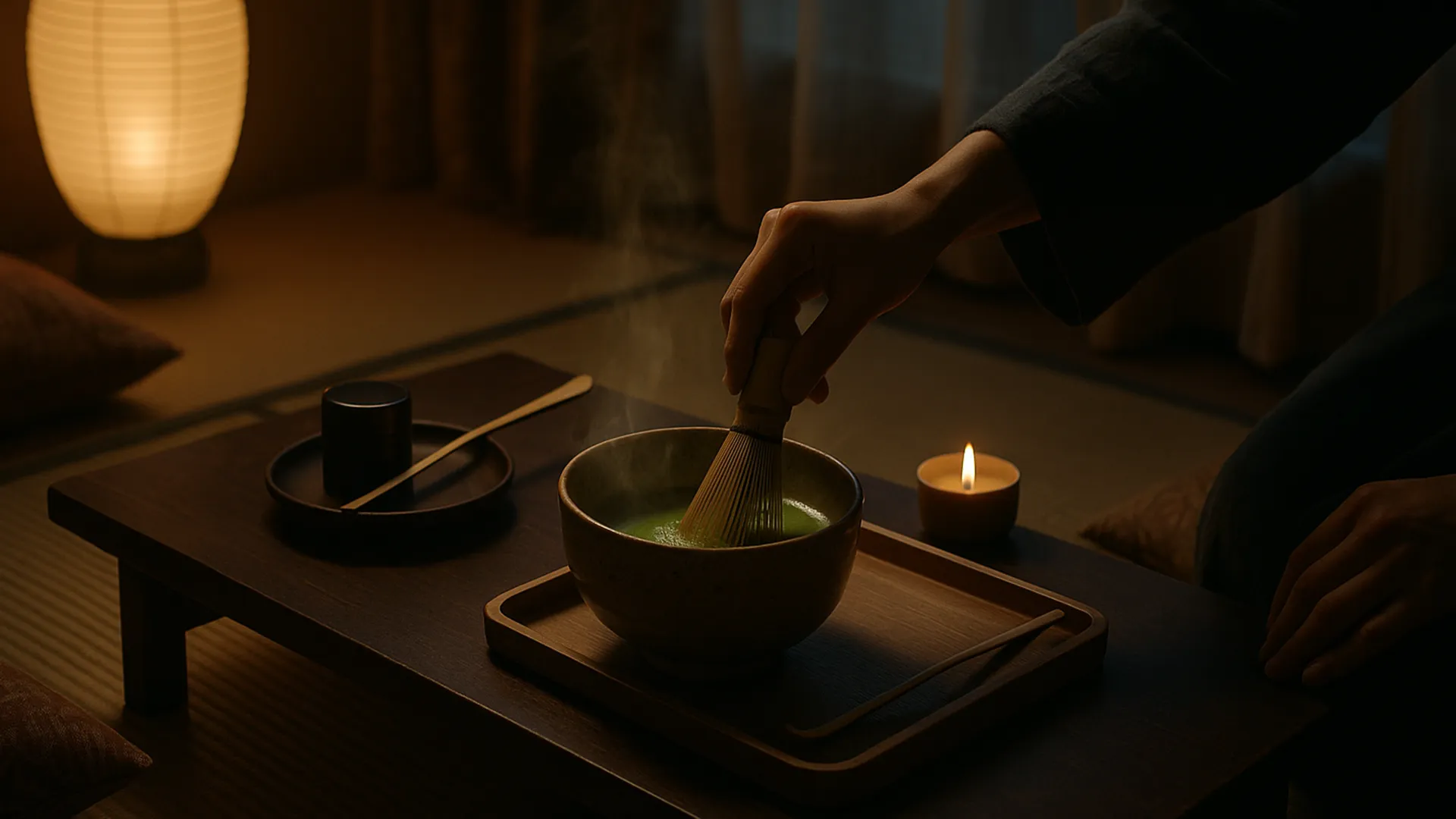
There is a phrase at the heart of the Japanese tea ceremony: ichigo ichie. It is usually translated 'one time, one meeting' — the idea that this gathering, this cup, these particular people in this particular light, will never occur again in quite the same way. The whole elaborate practice of chanoyu is, in a sense, a method for taking that idea seriously.
Watched from the outside, a tea ceremony can look like a great deal of fuss over a small green bowl. The bamboo whisk is warmed. The bowl is turned. The matcha is sifted, measured, whisked to a particular foam, served at a particular angle. Every motion is deliberate; nothing is hurried. To a culture trained to optimize, it can seem almost perverse — so much attention spent on so little.
Attention as the luxury
But that is the point, not a flaw in it. The ceremony is not really about the tea. It is a frame built to hold attention — yours, and your companions' — for a stretch of time, against everything that would pull it away. The slowness is not an inefficiency to be solved. It is the product.
We are, most of us, very out of practice at this. The modern day offers an endless supply of frictionless distraction, each interruption engineered to be slightly more compelling than the moment in front of us. The result is a peculiar kind of loneliness: surrounded by stimulation, starved of presence.
Ninety minutes
This is why Moon & Steam seats its guests for ninety minutes, by reservation, and pours by the pot. Not to be precious about it — but because a real conversation, like a good tea, needs room to open. You cannot rush a steeping. You cannot rush a friendship into depth. Both want time, and a little ceremony to protect it.
Whisk the matcha. Turn the bowl. Let the night be exactly as long as it is. There is nowhere else, for ninety minutes, that you need to be.
Be part of what we're building.
Moon & Steam isn't open yet — join the Noctea Society for first reservations, or help us build it.